आघुनिक बिहार के निर्माता डा. श्री कृष्ण सिंह स्वतंत्रता-संग्राम के अग्रगण्य सेनानियों में से रहे है । इनका का सम्पूर्ण जीवन राष्ट्र एवं जन-सेवा के लिये समर्पित था । स्वाधीनता की प्राप्ति के बाद बिहार के नवनिर्माण के लिए उन्होंने जो कुछ किया उसके लिए बिहारवासी सदा उनके ऋणी रहेंगे । राजनीतिक जीवन के दुर्धर्ष संघर्ष में निरन्तर संलग्न रहने पर भी जिस स्वाभाविकता और गम्भीरता के साथ वे अपने उत्तरदायित्वों का निर्वहन करते थे वह आज के युग मे अत्यन्त दुर्लभ है । सत्य और अहिंसा के सिद्धांत में उनकी आस्था अटल थी ।
बिहार केसरी डा. श्री कृष्ण सिंह का जन्म 21 अक्टूबर 1887 ई. (तद्नुसार कार्तिक शुक्ल पंचमी संवत् 1941 वि.) को उनके ननिहाल वर्तमान नवादा जिला के नरहट थाना अन्तर्गत खनवाँ ग्राम के एक संभ्रांत एवं धर्मपरायण भूमिहार ब्राहाण परिवार में हुआ था । उनके पूज्य पिता का नाम श्री हरिहर सिंह था ।
बचपन से ही श्रीबाबू में संकल्प-दृढ़ता स्वाभिमान एवं ज्ञानार्जण के प्रति अभिरूचि आदि गुणों का आभास होने लगा था । जिसका सम्यक विकास आगे चल कर हुआ । डा. श्रीकृष्ण सिंह के प्रारम्भिक शिक्षा अपने गाँव कि प्राइमरी पाठशाला में हुई और छात्रवृति पाकर आगे की पढ़ाई के लिए वे जिला स्कूल, मुगेंर, में भर्त्ती हुए । सन् 19.6 ई. में इण्ट्रेंस की परीक्षा प्रथम श्रेणी में पास कर वे पटना कालेज के छात्र बने । कालक्रम से आपने 1913 में एम.ए. की डिग्री तथा 1914 ई. में बी. एल. की डिग्री कलकत्ता विश्वविद्यालय से प्राप्त की ।</p>
अपने युग के अन्य मेधावी छात्रों से सर्वथा भिन्न श्रीबाबू की मनोवृति प्रारम्भ से ही सरकारी नौकरी के प्रतिकूल थी । अतः शिक्षा समाप्ति के बाद अपने मुगेंर मे वकालत शुरू की । कुछ ही दिनों में आपकी वकालत चमक उठी । विद्यार्थी जीवन से ही डा. श्रीकृष्ण सिंह राष्ट्र एवं समाज सेवा की ओर प्रवृत हुए उन बंगभंग एव स्वदेशी आंदोलन आदि तत्कालीन राजनीतिक आंदोलनों का कापफी प्रभाव पड़ा । वे प्रारम्भ से ही लोकमान्य बाल गंगाधर तिलक तथा श्री अरविन्द के विचारों से प्रभावित थे । अतः अपने छात्र जीवन से ही वे एक जननेता के रूप में बिहार के राजनीतिक क्षितिज पर प्रकट हो चुके थे ।
राष्ट्रपिता महात्मा गाँधी से डा. श्रीकृष्ण सिंह की पहली व्यक्तिगत भेंट सन् 1911 ई. में हुई और उसके बाद ही उनकी जीवन-यात्रा में एक नया मोड़ आया और वे महात्मा गाँधी के कट्टर अनुयायी बन गये । उत्कृष्ट वाग्मिता का वरदान डा. श्रीकृष्ण सिंह को प्रारम्भ से ही प्राप्त था और अपने इसी सिंह गर्जन के लिए बिहार केसरी की सम्मानपूर्ण संज्ञा से विभूषित हुए । डा. श्रीकृष्ण सिंह ने पहली जेल यात्रा सन् 1911 ई. में ब्रिटेन के युवराज प्रिन्स ऑफ वेल्स की भारत-यात्रा के बहिष्कार-आंदोलन के क्रम में की थी । मार्च, 1911 ई. में विजयवाड़ा कांग्रेस के निर्णयानुसार तिलक स्वराज्य फंड के लिए एक करोड़ रूपया एकत्र करने का जब निश्चय किया गया तो बिहार प्रान्तीय कांग्रेस समिति द्वारा निर्मित तिलक स्वराज्य फंड के डा. श्रीकृष्ण सिंह संयोजक बनाये गये ।
अपनी अद्भुत कर्मठता, उदारता एवं प्रखर राजनीतिक सूझ-बूझ के धनी डा. श्रीकृष्ण सिंह सन् 1917 ई. में लेजिस्लेटिव कौंसिल और सन् 1934 ई. में केन्द्रीय एसेम्बली के सदस्य चुने गये । सन् 1931 ई. का भारतीय संविधान जब 1 अप्रैल 1937 से लागू हुआ तो डा. श्रीकृष्ण सिंह के प्रधान मंत्रित्व से ही बिहार में स्वायत्त शासन का श्रीगणेश हुआ । वे ही बिहार के एक ऐसे वरेण्य कालपुरूष थे जो जीवन के अंतिम घड़ी (31 जनवरी 1961) तक बिहार के मुख्य मंत्री के सम्मानित पद पर बने रहे । बीच में 1938 में अंडमान निकोबार में राजनीतिक कैदियों को छोडे़ जाने के प्रश्न पर ब्रिटिश सरकार से मतभेद के कारण पद-त्याग किया था । पुनः एक बार 1939 मे कांग्रेस के निदेशानुसार ब्रिटेन की नीति के विरोध में त्याग-पत्र दिया था । </p>
श्रीकृष्ण बाबू स्निग्धा और उदार भावनाओं के मूर्तिमान प्रतीक थे । दूसरों के कष्ट को देखकर द्रवित होना और मार्मिक दृश्यों के आघात से फूट पड़ना उनका सहज स्वभाव था । उनका हृदय निश्च्छल प्रेम और दया से परिपूर्ण था । उनका पुस्तक-प्र्रेम अलौकिक था और उनकी वाग्मिता सुविख्यात थी । उनकी प्रगाढ़ विद्वता से ही अनुप्रमाणित होकर पटना विश्वविद्यालय ने डॉक्टर ऑफ लॉ की उपाधिा से अलंकृत किया था । </p>
नव बिहार के निर्माता के रूप में बिहार केसरी डा. श्रीकृष्ण सिंह का उदात्त व्यक्तिगत, उनकी अप्रतिम कर्मठता एवं उनका अनुकरणीय त्याग़ बलिदान हमारे लिए एक अमूल्य धारोहर के समान है जो हमे सदा-सर्वदा राष्ट्रप्रेम एवं जन-सेवा के लिए अनुप्रेरित करता रहेगा । आज का विकासोन्मुख बिहार डा. श्रीकृष्ण सिंह जैसे महान शिल्पी की ही देन है जिन्होंने अपने कर्मठ एवं कुशल करो द्वारा राज्य की बहुमुखी विकास योजनाओं की आधारशिला रखी थी । बिहार हमेशा उनका ऋणी रहेगा। उन्होंने इस राज्य का लगभग 24 वर्षं तक (1 अप्रैल 1937 से 2..4.1946 तक प्रधान मंत्री एवं 2..4.1946 से 31.1.1961 तक मुख्य मंत्री ) प्रधानमंत्री एवं मुख्य मंत्री के रूप में सफलतापूर्वक दिशा-निर्देश किया था एवं इस राज्य के नव निर्माण में महत्वपूर्ण भूमिका निभायी थी ।
डा. श्रीकृष्ण सिंह ने अपनी बहुआयामी प्रतिभा, विराट व्यक्तित्व सेवा और साधानामय जीवन के कारण जो विराट यश और गौरव अर्जित किया था । वह उनके विशाल और विलक्षण व्यक्तित्व के सर्वथा अनुरूप था । श्रीबाबू अब हमारे बीच नही हैं किन्तु उनका संदेश उनकी विचारधाराएं] उनके उच्च आर्दश सदैव हमारा मार्ग दर्शन करते रहेंगे । उनका कहना था - आजाद होने के बाद हमें जो काम करना है वह निर्माणात्मक है । पहले हमें सिपर्फ जोश पैदा करना था और वह काम कुछ आसान था । आज हमें अपने देश के करोड़ों लोगों के नजदीक पहुँच कर उनके हृदय तथा मस्तिष्क को छूना है ताकि आज उनके भीतर देश के निर्माण में योग देनेवाली जो शक्ति कुंठित होकर बैठी है । वह जीवन को सुन्दर बनाने के लिए काम करने की उत्कट इच्छा के रूप में प्रवाहित हो सके ।
श्रीबाबू के विषय में भारत के महान विभूतियों के विचार
श्री बाबू एक महान वक्ता थे जहाँ भी वे भाषन करने को खड़े होते थे जनता प्रभावित हो उठती थी । देश के लिए बलिदान-भावना उनके व्यक्तित्व की विशेषता थी । - डॉ. राजेन्द्र प्रसाद
श्री बाबू का ज्ञान बड़े-से-बड़े पुस्तकालय की पुस्तकों में समाहित ज्ञान के समान था ।- जवाहर लाल नेहरू
वे अपने दिल की बातों को छिपाना तो जानते ही नही थे । तालाब के स्वच्छ पानी की तरह उनके हृदय में क्या भरा है साफ-साफ दिखाई पड़ता था । - संत विनोबा भावे
डा. श्रीकृष्ण सिंह देश की स्वतंत्रता के लिए संग्राम करने वाले वीर योद्धा आघुनिक बिहार के निर्माता तथा देश के एक प्रमुख नेता थे- डॉ. जाकिर हुसैन
श्री बाबू ने उस राज्य के लिए अपने को समर्पित कर दिया था] जिसके शासक थे । उनके तौर-तरीके उनकी बुद्धिमत्ता अपने राज्य के प्रति उनका स्नेह भाव किसी भी प्रशासन के लिये बहुमूल्य सिद्ध हो सकते थे । - डा. विधानचन्द्र राय

Showing posts with label BhumiharGroup. Show all posts
Showing posts with label BhumiharGroup. Show all posts
Basawon Singh (Sinha) greatest nationalists Freedom fighter
Basawon Singh (Sinha) has been among the greatest nationalists who joined the freedom struggle at the age of 13 and kept on his struggle for the independence of the country from the colonial yoke and fighting for the rights of the underprivileged, industrial labours and agricultural workers all throughout his life.

Basawon Singh (Sinha) was born in a poor family in Jamalpur (Subhai), Hajipur on March 23, 1909.He used to walk eight miles to go to the nearest school to get education. His formal education came to an abrupt end when he was rusticated from college in just after completing his matriculate because of joining the Nationalist Movement.
The Government of India issued a commemorative stamp in his name on 23/03/2000.There is an indoor stadium in his name in the city of Hajipur in Bihar.


सर गणेश दत्त सिंह (1868-1943)
सर गणेश दत्त सिंह (1868-1943) का जन्म नालंदा में हुआ था। वे कुशल प्रशासक एवं शिक्षाविद थे। उन्होंने स्वतंत्रता से पूर्व बिहार व उड़ीसा में शिक्षा एवं स्वास्थ्य के क्षेत्र में काफी काम किया।
सर गणेश दत्त सिंह ने स्वतंत्रता प्राप्ति से पूर्व 14 अप्रैल 1933 को नियमावली बनाकर 'सर गणेश दत्त ट्रस्ट फंड कोष' का गठन किया था। इसके लिए उन्होंने वर्ष 1923 से 1936 तक बिहार-उड़ीसा का मंत्री रहने के दौरान अपने वेतन चार हजार रुपए का तीन-चौथाई अंश जमा कर फंड के लिए धन संचित किया था।
इसके गठन के पीछे उनका उद्देश्य पटना विवि में अध्ययनरत वैसे छात्रों की मदद करना था, जिनकी अभिरुचि विज्ञान, तकनीकी और उद्योग संबंधी उच्च शिक्षा प्राप्त करने में थी, लेकिन निर्धनता आड़े आ रही थी।

पटना विवि को घर दे दिया था दान
सर गणेश दत्त सिंह, उन्होंने अपना घर 'कृष्णा कुंज' पटना विवि को दान में दे दिया था। इसी इमारत में आज 'इंस्टीट्यूट आफ साइकोलाजिकल रिसर्च एंड सर्विस' है। पूर्व न्यायाधीशों को पटना विवि के कुलपति के रूप में चुनने की परंपरा पर भी उनके प्रयास से ही विराम लगा।
Sir Ganesh Dutt Singh - Indian freedom fighter, administrator and educationalist
Sir Ganesh Dutt Singh, shortly called Ganesh Dutt was an Indian freedom fighter, administrator and educationalist from Bihar.
In the pre-independent era, as an administrator he has given significant contributions to the improvisations of education and health services in the states of Bihar and Orissa. He was also a philanthropist who made generous donations from his earnings and personal property for the setup of educational institutions as well as new wings in many schools and colleges. He played a key role in Patna University’s development. He holds the record of longest tenure as a minister during British rule. He served as Minister of Local Self Government in the British Cabinet for 14 long years. State functions are organized every year by state of Bihar on his birth anniversary.
He was born in 1868 in Chhatiyana village, Nalanda district, Bihar.
He completed LLB and started practising as a lawyer. He had association with politics too and has served as a minister in the government of Bihar and Orissa from 1923 to 1937. The states were divided in the year 1936. He was knighted by British in 1928 for his overall contributions for social cause. On the introduction of provincial autonomy in 1937 he returned from his tenure as a minister.He donated a big amount for the development of Patna University in the 1930s. He also gave preference to backward castes than forward people for students’ admission. University awarded him honorary doctorate in 1933.
Dr. Sri Krishna Sinha, The Statesman Administrator
Dr. Sri Krishna Sinha (popularly known as Sri Babu) was born on 21st October, 1887 in Maur village in Munger. He obtained his early education in his village school and thereafter at Zila School in Munger. It was at Munger that the urge to liberate the motherland from colonial rule entered his blood-stream; and on the bank of the Ganga on which Munger is located, he took a vow to
work for freedom until it was secured. Sri Babu later moved to Patna University and completed his education. He started practising law in 1915, but gave it up in 1921 to take active part in
non-cooperation movement.

Sri Babu gave Bihar sound policies and a responsive administration as its first Chief Minister. Sri Babu belonged to that rare group of statesman-administrators who possessed creative imagination and strong will to achieve welfare of the people through a responsive administrative system.
He had ideas, vision and understanding of the country’s historical, social and religious forces , a unique leader who ably combined statesmanship with genius of governance.
Sri Babu was a forceful speaker. As the echoes of his voice resonated across Bihar, people began calling him Bihar Kesari, an epithet that has come to have natural association with him.
Sri Babu first went to jail in 1922. He underwent different terms of imprisonment for a total of about eight years. Impressed by the courage of Sri Babu, named him ‘the first Satyagrahi of Bihar’. The Indian National Congress too made him the leader of the State Congress of Bihar.
Sri Babu formed Bihar’s first Cabinet at Patna on 20th July, 1937. He resigned in 1939, as did all Congress Premiers of the Provinces over the question of involving India in the Second World
War without the consent of the Indian people. He again formed the Cabinet in 1946. He remained Chief Minister continuously till his death on 31st January, 1961. Sri Babu was a staunch opponent of casteism and always rose in defence of the oppressed, the backward and the minority community.
He will be long remembered for his quest for freedom. It may be recalled that at the Lahore Congress session in 1929, a resolution was passed for full independence (Poorna Swaraj).
The Congress President of the Session and Sri Babu were among the prominent leaders who danced on the dais itself, which had the image of Bharat Mata painted as its background. One could only
imagine the depth of longing for freedom that was in the heart of Sri Babu.
Sri Babu was always interested in self-study and his ideas and speeches were noted for their wisdom. He was a voracious reader and very fond of books. Instead of spending time on idle gossip, he
preferred to read books. He had a personal collection of nearly 20,000 books which are now housed in a campus in Munger.
Paul Hansen Appleby (1891-1963) who visited India in 1952, 1954 and 1956 and submitted two reports on public administration in India to say that Bihar was a well-administered State during Sri Babu’s time.
Sri Babu left an inspiring legacy for civil servants. He believed that a multi-religious, multi-ethnic and multi-linguistic polity like ours needed impartial civil servants who prided themselves as being
servants of the Constitution and not of any individual, group but it belongs to people at large.
work for freedom until it was secured. Sri Babu later moved to Patna University and completed his education. He started practising law in 1915, but gave it up in 1921 to take active part in
non-cooperation movement.
He had ideas, vision and understanding of the country’s historical, social and religious forces , a unique leader who ably combined statesmanship with genius of governance.
Sri Babu was a forceful speaker. As the echoes of his voice resonated across Bihar, people began calling him Bihar Kesari, an epithet that has come to have natural association with him.
Sri Babu first went to jail in 1922. He underwent different terms of imprisonment for a total of about eight years. Impressed by the courage of Sri Babu, named him ‘the first Satyagrahi of Bihar’. The Indian National Congress too made him the leader of the State Congress of Bihar.
Sri Babu formed Bihar’s first Cabinet at Patna on 20th July, 1937. He resigned in 1939, as did all Congress Premiers of the Provinces over the question of involving India in the Second World
War without the consent of the Indian people. He again formed the Cabinet in 1946. He remained Chief Minister continuously till his death on 31st January, 1961. Sri Babu was a staunch opponent of casteism and always rose in defence of the oppressed, the backward and the minority community.
He will be long remembered for his quest for freedom. It may be recalled that at the Lahore Congress session in 1929, a resolution was passed for full independence (Poorna Swaraj).
The Congress President of the Session and Sri Babu were among the prominent leaders who danced on the dais itself, which had the image of Bharat Mata painted as its background. One could only
imagine the depth of longing for freedom that was in the heart of Sri Babu.
Sri Babu was always interested in self-study and his ideas and speeches were noted for their wisdom. He was a voracious reader and very fond of books. Instead of spending time on idle gossip, he
preferred to read books. He had a personal collection of nearly 20,000 books which are now housed in a campus in Munger.
Paul Hansen Appleby (1891-1963) who visited India in 1952, 1954 and 1956 and submitted two reports on public administration in India to say that Bihar was a well-administered State during Sri Babu’s time.
Sri Babu left an inspiring legacy for civil servants. He believed that a multi-religious, multi-ethnic and multi-linguistic polity like ours needed impartial civil servants who prided themselves as being
servants of the Constitution and not of any individual, group but it belongs to people at large.
Bihar Kesari Dr. Sri Krishna Singh first Chief Minister of Bihar
‘Bihar Kesari’ Dr. Sri Krishna Sinha was born on 21st October, 1887 in his maternal grandfather’s house,
 Khanwa in Nawada District , Bihar. His paternal village is Maur, near Barbigha in the then Munger District that is now part of Sheikhpura District. He got his early education in his village school, and later in Zila School, Munger. In 1906 he joined Patna College, which was then an affiliate of the University of Calcutta, where he gradually emerged as promising student leader. He studied law and started practicing in Munger from 1915. In the meantime, he married and had two sons, Shivshankar Singh and Bandishankar Singh (more commonly known as Swaraj Babu) who later held various posts in the state government . At Munger, he avowed to work relentlessly to free India from the English. He left practising law in 1921 to take active part in Mahtma Gandhi’s non co-operation movement . As the echoes of his voice spread around Bihar, people began calling him ‘Bihar Kesari’. Sri Krishna Babu first went to Jail in 1922. He underwent different terms of imprisonment for a total of about eight years. In 1930, Sri Babu played an important role in ‘Namak Satyagrah’ at Garhppura. During arrest he suffered severe scalding injuries to his hands and chest. Under the Act of 1935, Sri Babu formed his Cabinet Patna on 20th July, 1937. He disagreed with the Governor on the issue of the realease of political prisoners and resigned. The Governor had to give in finally and Sri Krishna Babu resumed his office. But he again resigned in 1939 over the question of involving India in the Second World War without the consent of the Indian people. Impressed by this courage of Dr. Sinha, Mahatma Gandhi in 1940 awarded him the distinctive of being called ‘ the first Satyagrahi of Bihar. As the Chief Minister, Dr. Sri Krishna Sinha served Bihar continuously from 1946 to 1961. He was always interested in self study and his ideas and speeches were noted for their wisdom. He was a staunch opponent of castes ism and always rose in defence of the oppressed, the backward and the Harijans. He was also considered as among “Architects of Modern Bihar”. He passed away on 31st January, 1961.
Sir Ganesh Dutt Singh
Sir Ganesh Dutt Singh was born to a Bhumihar Brahmin family in Chhatiyana village, Nalanda district, Bihar state.
He was a successful lawyer, and later a minister in the government of Bihar and Orissa from 1923 to 1937, the longest tenure for any minister anywhere in the British Empire.
Dutt was the Minister of Local Self Government in the British Cabinet from 1923 till 1937 when the Provincial Government was established.
While he was the Minister of Local Self Government, Dutt was made Knight Bachelor by the British for his contributions to the public good. State functions are organised by the Government of Bihar on the anniversary of Dutt's birth on 13 January every year

Literature on Sir Ganesh Dutt Singh

Ram Dayalu Singh
Ram Dayalu Singh was First Speaker of Bihar Assembly


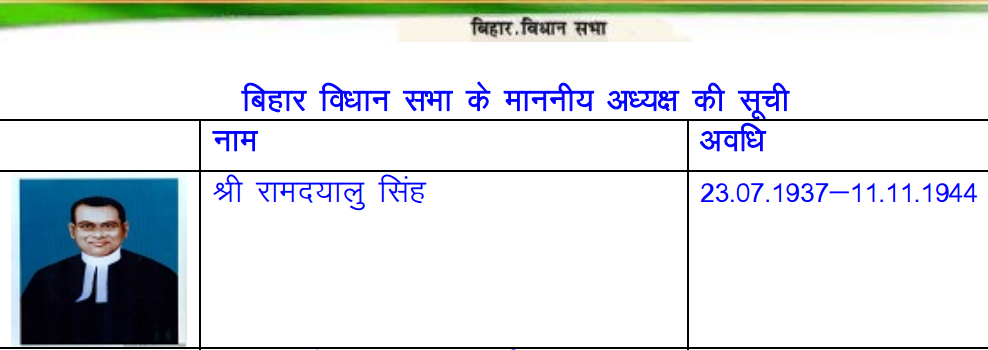
He was from Gangawa village of Muzaffarpur
He was strong advocate of SRI BABU candidature of premiership of the province of Bihar in 1937 assembly election (first).
There is a famous college in Muzaffarpur which is named after him.
Rambriksh Benipuri
Rambriksh Benipuri
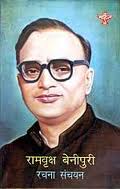
Ramavriksha Benipuri was a Hindi writer. He was born Benipur village Muzaffarpur
Born December 23, 1899
Died September 07, 1968
Ramavriksha Benipuri took active part in the Indian freedom movement, He had spent eight years in prison for fighting for India's independence.
He was also a journalist of Hindi Literature and started several newspapers like Yuvak in 1929 and regularly contributed in various others to spread the idea of nationalism and freedom from British rule.


Parliamentarian Pandit Prakash Vir Shastri
Pandit Prakash Vir Shastri was a noted Member of the Parliament of India. He was known for his eloquence and forceful oratory style, as well as his mastery of Sanskrit. Shastri was also a recognized leader in the Arya Samaj movement.

Born: December 30, 1923, Ayodhya
Death: November 23, 1977
Pandit
Prakash Vir Shastri (December 30, 1923 – November 23, 1977) was a noted Member
of the Parliament of India (Sansad). He was known for his eloquence and
forceful oratory style, as well as his mastery of Sanskrit. Shastri was also a
recognized leader in the Arya Samaj movement.
Career
Shastri was born on December 30, 1923 as Om Prakash Tyagi (अोउम प्रकाश त्यागी) in
the village of Rehra, in the J.P. Nagar district of Uttar Pradesh, earlier a
part of Mudarabad. He was politically active as a young man, obtaining an M.A.
degree from Agra University, and eventually rising to become Vice-Chancellor of
Gurukul Vrindavan. He earned his Shastri degree from Banaras Hindu University.
In 1958 Shastri was elected to the Lok Sabha as an Independent and until his
death continued to serve as an Independent member, first in the Lok Sabha[1]
and later in the Rajya Sabha. He was elected as a Jana Sangh nominee in
1974.
Oratory style
Known for his eloquence and forceful oratory style as well as his mastery of
Sanskrit, Shastri opposed the official designation of English as the national
language of India. He instead preferred Hindi, the country's classical native
tongue. He was also known for his abilities as a poet, and incorporated his
creative efforts into a number of his more well-known speeches. He was the
first Indian to speak in Hindi at the United Nations Organization, with Atal
Bihari Vajpayee being second.
Religious activism
Shastri was also internationally recognized as a devotee of the Arya Samaj
movement, a branch of Hinduism dedicated to the Vedas.
Shastri proposed the Religious Protection Bill in March 1960 in the Lok Sabha,
which called for the protection of religious minorities in the face of mass
conversions by force occurring across the country at the time. While he was
tolerant towards a wide diversity of religious practices, he shied away from
idolatry in his personal affairs and promoted the work of Swami Dayananda in
his writing.
Train accident[
Shastri was killed in a train accident on November 23, 1977. Shastri gave his
seat to the man sleeping in the bunk below him, a sign of respect in Hindu
culture as the lower bunk is closer to the ground. The man in the bunk above
him survived, while Shastri lost his life. He was survived by his wife and two
children.
Speech compilations
In early 2003, a collection of his parliamentary speeches was compiled for
publication, in part by former Deputy Prime Minister Lal Krishna Advani.
Freedom Fighter - Mahavir Tyagi
Mahavir Tyagi (1899–1980) was a prominent Indian independence fighter and famous parliamentarian from Dehra Dun, Uttar Pradesh (now in Uttarakhand) India. He was born on 31 December 1899 at Dhabarsi, Moradabad District in Uttar Pradesh, then known as the United Provinces.

Early life
Tyagi was educated in Meerut, Uttar Pradesh. He joined the British Indian Army and was posted in Persia but resigned after the
Jallianwala Bagh Massacre (also known as the Amritsar Massacre), which took place on 13 April 1919. He was court martialled in Quetta, capital of Baluchistan (then a part of India but now in Pakistan) and externed from Baluchistan with all pay deposits forfeited. Returning home, Tyagi became a staunch follower of Mahatma Gandhi.
In the independence movement
Mahavir Tyagi, who was active in the Kisan (peasant) movement, remained a lifelong member of the Indian National Congress. Active especially in the Western region of the United Provinces, he was imprisoned by the British eleven times. In the course of the non-co-operation movement in 1921 Mahavir Tyagi was based in Bijnor district. He was tried, inter alia, for sedition under Section 124A of the Indian Penal Code at Bulandshahr in the United Provinces, later known as Uttar Pradesh.( See Young India, 13 October 1921, and United Provinces Legislative Council Debates, 5 November 1921). In the course of the trial he was assaulted at the behest of the British Magistrate, W.E.J.Dobbs. (SeeIndependent, 9 October 1921, Leader, 10 October 1921 and Young India, 13 October 1921) In a series of commentaries on the incident, Mahatma Gandhi condemned the assault on Tyagi. (See Young India, 13, 20, 27 October 1921 and 10 November 1921; Collected Works of Mahatma Gandhi, Volume 21,1966 (CWMG), pp 284–5, 310–1, 312–3, 344–6, 406–7). A mass protest meeting presided over by Sayed Hassan Berni, Vakil against the Magistrate-directed assault on Tyagi was held in Bulandshahr with more than 4000 persons attending. (Young India, 13 October 1921). Describing the assault as a "crime against the nation", Gandhi asked : "Could for instance the Lord Chief Justice of England assault a prisoner being tried before him and still retain his high office?" (Young India, 20 October 1921)The editor-poet from Lahore, Zafar Ali Khan wrote a verse condemning the assault on Mahavir Tyagi. The matter of the magistrate-directed assault on Tyagi figured in the United Provinces Legislative Council on 4 November 1921. Initially evasive answers from the Government regarding action taken against the magistrate led to further questioning of Government on 5, 16 and 17 November 1921 in the course of which the Government distanced itself from the magistrate's action. The case was then transferred to the District Magistrate of Meerut and Tyagi, on being convicted and sentenced to two years' imprisonment, was sent to Agra jail. Even after his release from prison, the seditious Tyagi would remain a marked man for the British regime which had by now identified him as a dangerous opponent. (See UP Legislative Council Debates, 19 December 1925) In Uttar Pradesh politics Tyagi was known as a "Rafian", that is, an associate of Rafi Ahmad Kidwai, the famous Indian nationalist Muslim. (See M. Hashim Kidwai, Rafi Ahmad Kidwai, New Delhi, 1986, pp 215–216)
Mahavir Tyagi was close to, and had been a jail companion of, the leading Indian nationalist, Motilal Nehru, Jawaharlal Nehru's father. In the 1920s Tyagi helped resolve, with the help of Maulana Mohammad Ali, a misunderstanding that had arisen between Motilal Nehru and Jawaharlal Nehru (See Durga Das, India From Curzon to Nehru & After,London, 1969, pp 109–110). From sometime in the mid-1920s Tyagi made Dehra Dun his political base.
Mahavir Tyagi was a delegate to the All Parties National Convention held at Calcutta in December 1928 – January 1929. In a statement issued along with Srinivas Iyengar, Jawaharlal Nehru and others, Tyagi supported the position that the Principles of the Constitution of India drafted by the Motilal Nehru Committee should have been based on independence rather than Dominion Status. [Selected Works of Motilal Nehru, Vol 6, New Delhi, 1995,pp. 607–609] As regards settlement of communal differences, the statement endorsed the recommendations of the Nehru Report as agreed to by the Lucknow All Parties Conference, held in August 1928. (Idem) In November 1930, two Nepali activists, Kharag Bahadur and Dhanpati Singh, were arrested at the Delhi Railway station with documents indicating the involvement of Motilal Nehru, Jawaharlal Nehru, Vallabhbhai Patel, Mahavir Tyagi and some other Congress leaders in efforts to alienate the Gurkha soldiers from the British Indian Army.(See Kanchanmoy Mojumdar, Nepal and the Indian Nationalist Movement, pp 32–33). Tyagi was already in prison by this time, having been arrested a few months earlier for his participation in the Civil Disobedience Movement of 1930.
Political and parliamentary career
Tyagi was President of the Dehra Dun District Congress Committee in 1931 (See Selected Works of Jawaharlal Nehru, Vol 5, p. 211n) After Tyagi had served out his sentence for participation in the Civil Disobedience Movement of 1930, he was arrested again in Dehra Dun on 17 January 1932 with the resumption of Civil Disobedience and sentenced to two and a half years' imprisonment (Garhwali, Dehra Dun, 23 January 1932) In the decade before Indian independence he became a legislator in the United Provinces. In this capacity, he was, in 1939, a member of the Jaunsar-Bawar Enquiry Committee which heralded social and land reform in the tribal area of Jaunsar Bawar in Dehradun district of Uttar Pradesh (an area now forming part of Uttarakhand state). The committee recommended, inter alia, occupancy rights in land for tenants and the prohibition of forced labour. (A summary of the committee's recommendations is available in D N Majumdar, Himalayan Polyandry, Bombay,1962, pp 13–17)
When arrested in the Individual Satyagraha in November 1940, Tyagi was taken to Dehra Dun Jail where Jawaharlal Nehru was already lodged. (Selected Works of Jawaharlal Nehru, Vol 11, p. 506) In 1942 Tyagi and S K D Paliwal were arrested under the Defence of India Rules on 6 June, that is more than two months before the Quit India movement was actually launched; Rafi Ahmad Kidwai had been arrested even earlier on 12 May. (Selected Works of Jawaharlal Nehru, Vol 12, p. 344) In a speech at Bombay on 18 June 1942, Nehru condemned these arrests as "putting a hindrance to civil defence work".(Idem) Three years later Nehru, on being transferred from Ahmadnagar Fort Prison to jails in the United Provinces in the summer of 1945, would see Tyagi again, then a political prisoner in Bareilly Central Jail. (Selected Works of Jawaharlal Nehru, Vol 13, p. 618)
While he himself adhered to Gandhian non-violence, Mahavir Tyagi had close contacts even among the "revolutionaries", that is those who were not opposed to using violent means to overthrow the imperial state. These included Sachindra Nath Sanyal, Prem Kishan Khanna and Vishnu Sharan Dublish.
When riots broke out in the Indian subcontinent after its partition in 1947, Tyagi, taking inspiration from Gandhi, staked his own life to help save Muslims in his home state and to bring peace.(Choudhry Khaliquzzaman, Pathway To Pakistan, Lahore, 1961, p. 400 ; see also Ansar Harvani, Before Freedom and After, New Delhi, 1989, p. 100 and Qazi Jalil Abbasi's account in Bipan Chandra, The Epic Struggle, New Delhi, 1992, p. 60) For a further account of how Mahavir Tyagi took over the local administration at this time after he found that it was ineffective in controlling the situation and restoring public order, see Ajit Prasad Jain, Rafi Ahmad Kidwai : A Memoir of his Life and Times, Bombay, 1965, pp 73–74.
Tyagi's political activities extended also to the Tehri Garhwal region. He had taken a keen interest in the movement for democratic rights there and played a prominent role also in support of the movement in Tehri State for merger with independent India.( See, for example, Ajay Singh Rawat, Garhwal Himalayas : A Historical Survey, New Delhi,1983,p. 205)
Mahavir Tyagi was a member of the Constituent Assembly of India. In this capacity he is known especially for his strong stand against unsafeguarded Preventive Detention laws and against suspension of fundamental rights in emergency situations. He stood for a fair and independent judiciary. "The seat of justice is the Seat of God", he had famously told the Constituent Assembly.(Granville Austin, The Indian Constitution : Cornerstone of A Nation, Oxford University Press, Bombay, 1966, p. 164)
On India's becoming a Republic in 1950, Tyagi remained a member of the Provisional Parliament (1950–52),and the Lower House of the Indian Parliament, that is, the First, Second and Third Lok Sabha (1952–67). Tyagi was Minister for Revenue & Expenditure in the Nehru Council of Ministers (1951–53). In this capacity he introduced the First Voluntary Disclosure Scheme, known as the Tyagi Scheme, primarily, as he put it, to bring into the open incomes which had not been revealed to the alien government prior to independence. While in the Ministry of Finance, Tyagi earned a reputation as a strict economiser. His practical, man-of-the-soil approach was reflected also at the first meeting of the National Development Council, held in Delhi on 8 and 9 November 1952, where Tyagi suggested that "manual work should be made part of the daily curriculum of education".( Summary Record of Discussions of the National Development Council, NDC, Meetings : Five Decades of Nation Building, Vol 1, Government of India, Planning Commission, 2005, p. 9)
Later Mahavir Tyagi became Minister for Defence Organisation (1953–57). In this capacity, he encouraged the process of indigenisation in production as also the complete Indianisation of Indian armed forces. He inaugurated I N S Garuda, the air arm of the Indian Navy. He also initiated the project for the manufacture of HF-24, which would be the first fighter plane to be produced by a developing country. His statement in October 1955 that India would purchase defence equipment "from any country, wherever it suits her" and that India was "not tied down to any country or bloc", attracted attention around the world.("India Declares Intention to Buy Arms Anywhere",The Canberra Times, 6 October 1955). In policies and in the implementation of laws and rules, Tyagi emphasised the human element, advising officers "not to forget the human element when interpreting the rules and regulations". (Archives of speech on 10 July 1955 at Ordnance Factory, Ishapore, reproduced in Sainik Samachar, Vol 51, No. 13, 1–15 July 2004). General B M Kaul records in his memoirs that as Minister of Defence Organisation, Tyagi opposed policy proposals involving draconian measures in the tribal areas of India's North-East.( See B M Kaul, The Untold Story, New Delhi, 1967, p. 162 )
Tyagi also gave instructions for recruitment of Muslims in large numbers in the Indian Army. The proportion of Muslims in the Army had fallen after Partition of India in 1947.
Known for his independence, Tyagi opposed, even while he was a minister, the reorganisation of Indian states on a linguistic basis which was, however, ultimately carried out in 1956.(Indian Express, Madras, 24 November 1955) He welcomed the victory of the Communist Party of India in Kerala state in the General Elections of 1957 (Leader, Allahabad, 2 April 1957) Later Tyagi opposed the decision to dismiss the Communist government led by E M S Namboodiripad in Kerala at the end of the fifties, saying that this would establish a wrong precedent. A political scientist records in a significant study that Tyagi warned at the time "that the Congress Party was 'digging its own grave' by aligning with caste and communal forces". (B D. Dua, Presidential Rule in India 1950–1974 : A Study in Crisis Politics, New Delhi, 1979, p. 112) Tyagi sought also to inculcate independence in others :
He was critical of the tendency among political workers obsequiously to touch their leaders' feet and lashed out also at some senior bureaucrats who, he observed, had started touching ministers' feet. (Touching of Leaders' Feet : Tyagi Deplores Tendency, The Tribune, Ambala, 26 June 1959) At the 1957 session of the All India Congress Committee (AICC), Tyagi suggested abandoning the practice of the Congress President nominating all the members of the Congress Working Committee. Though his suggestion that 10 out of the 21 Working Committee members ought to be elected was not accepted, Jawaharlal Nehru agreed with Tyagi that the same members ought not to be re-nominated year after year. (Economic Weekly, 7 September 1957)
Tyagi was Chairman of the Direct Taxes Administration Enquiry Committee (1958–59) and in that capacity paved the way, along with the Law Commission, for the Income Tax Act, 1961.
Aksai chin debate
Tyagi famously criticised Nehru's statement in the Indian Parliament in the prelude to the Sino-Indian War: Nehru commented that "Not a blade of grass grows in Aksai Chin", attempting to explain that Aksai Chin was a barren, inhospitable land and the nation had lost little by its occupation by China. Tyagi retorted, pointing to his own bald head:"Nothing grows here ..should it be cut off or given away to somebody else?". A tense situation that had been developing in the House on the subject of the border conflict was averted as the House dissolved in laughter in which Nehru also joined. Tyagi continued to enjoy an affectionate relationship with Jawaharlal Nehru. He served as Chairman of the Public Accounts Committee of Parliament (1962–64).
Later career
In April 1964, a month before Nehru's death, Tyagi rejoined the Government as Cabinet Minister in charge of Rehabilitation. In the General Elections of 1967 which saw a popular backlash against the Congress Party, Tyagi lost to an independent candidate backed by an anti-Congress combination of parties.
In 1968 Mahavir Tyagi became the Chairman of the Fifth Finance Commission.After the split in the Congress in 1969, Tyagi stayed with the Congress(O), the organisational wing of the party. In 1970 he was elected to the Upper House of Parliament, the Rajya Sabha, from Uttar Pradesh and led the Congress(O) in the House till he retired in 1976. Tyagi's being in the Congress(O) did not prevent him from being critical of the movement led by Jaya Prakash Narayan in 1974–75.
He was equally critical of the Emergency imposed by Prime Minister Indira Gandhi in 1975. Mahavir Tyagi died in New Delhi on 22 May 1980. A popular figure, he had friends across political parties and was widely admired for his integrity, outspokenness, ready wit and sense of humour.
Writings
Prior to independence, Mahavir Tyagi had written a booklet on proportional representation. His memoirs in Hindustani were published in the 1960s in two volumes : (i) Ve Kranti Ke Din and (ii) Meri Kaun Sunega. These volumes have now been combined in one and, along with some other unpublished articles by Tyagi, have been published under the titleAzadi Ka Andolan: Hanste Huye Aansu (Kitab Ghar, 24 Ansari Road, Daryaganj, Delhi).
Freedom Fighter Pundit Yamuna Karjee
Yamuna Karjee was a popular freedom fighter, independence activist and patriot who enthusiastically participated in the Indian freedom Movement. Yamuna Karjee was highly inspired with the leadership of Swami Sahajanand Saraswati who started the peasant movement and kisan movement.

Yamuna Karjee along with Rahul Sankatriyan and other notable political leaders, Karjee started publishing weekly Hindi journal with the title Hunkar in the year 1940. Later on Hunkar became the ambassador of kisan Movement. He was also the president of Kisan Sabha and very soon elected as president of journalist association.
Political career of Yamuna Karjee
After completing his education, he got the offer of numerous government jobs. But karjee rejected all the offers which came from government. Yamuna Karjee became a notable Hindi Journalist. He joined the editorial division of Bharat Mitra. Bharat Mitra was a Hindi weekly which were published in Calcutta. From 1920-1921, Karjee aggressively participated in Non cooperation movement


Freedom Fighter - Pandit Sheel Bhadra Yajee
Pandit Sheel Bhadra Yajee was born on 22nd March, 1906 at Bhaktiyarpur village in Patna district of Bihar. The only child of Pandit Shivtahal Yajee and Smt. Reshma Yajee. Sheel Bhadra was deprived of motherly love at the tender age of ten years when his mother passed away. The child Sheel Bhadra was brought up by Smt. Parvati, wife of his cousin Shri Kamal Yajee.


During his student life in Bhaktiyarpur Yajeeji's day used to begin very early as he had to work in the fields before attending the school. After completing his school education he went for higher studies to Bihar National College in Patna, 30 miles away from his village. It was during his student days he came under the spell of the Congress and took to wearing Khadi. Gradually he became an active student leader, worthy of their family tradition. He never missed any chance of participating in the sessions of all India Youth Congress. He took active part in Bharat Navajawan Sabha held at Karachi, presided over by Subhas Chandra Bose in 1931.
During the 1930-32 Mass Satyagraha Movement led by Mahatma Gandhi. Shri yajee was the director of Congress organization of Patna District. In February 1934, a devastating earthquake struck Champaran, Saran, Muzaffarpur, Darbhanga, Patna, Bhagalpur, Shabbad and Gaya Districts of Bihar.
At the time of the earthquake, there were nearly 5000 Freedom Fighters under the lock-up in the Patna Camp Jail which crumbled into pieces. Hence, the Government unconditionally released all the prisoners from this Jail. Shri Yajee was also among the prisoners in the Patna Camp Jail.
Yajee was the chosen lieutenant of the nation's accredited Kisan leader, the Late Swami Sahajanand Saraswati, who fought the combined exploitation of the British and the Zamindari systems. Yajeeji became a member of Bihar Legislative Assembly in 1937. In March 1940, a massive demonstration was held at Ramgarh in Bihar by the Forward Bloc and Kisan Sabha just opposite the Congress pandal. Called as the All India Anti Compromise Conference it rallied even bigger crowds than the Annual Congress Session.
The Anti-Compromise conference was attended by 21,000 delegates from all over country and two lakh people participated. Shri Yajee was the chief organiser of this Anti-Compromise Conference.
Just after his release from the Hazaribagh Central Jail in March,1942, a warrant of arrest was issued against him but he remained underground in 1942 and 1943. He was declared absconder and a reward of rupees twenty five thousand was announced to arrest him dead or alive. He became member of the AICC in 1942.
He was vice President of the All India Forward Bloc but in the absence of Netaji Subhas Chandra Bose he was appointed president of the All India Forward Bloc to conduct the Quit India Movement in India in 1942.
When in 1955, the Indian National Congress adopted Socialism at Awadi, and then at the invitation of Jawaharlal Nehru, he and the INA leader General Mohan Singh joined the Indian National Congress.
From 1955 to 1976 Yajeeji became the Congress Regional secretary of the North-East Zone. He was a member of the Rajya Sabha from 27-4-1957 to 2-4-1958, 3-4.1958 to 2-4-1964 and 3-4-1966 to 2-4-1972.
Subscribe to:
Posts (Atom)